silverscribe87:

mkfoodshops:

Attention SU fandom,

Former storyboarder and artist on the Crewniverse Jesse Zuke (Formerly known as Lauren Zuke when with the Crew) is currently facing severe financial troubles due to them not being able to work as an animator anymore due to serious mental ailments. They are currently facing eviction from the apartment at the risk of being homeless and without a job. Luckily, their gofundme page has already raised enough money to pay off one month. However, almost the entire fandom still is not aware of Zuke’s current situation. Let’s give them all the support and spread the awareness!

Here is their gofundme page: 

https://www.gofundme.com/housingforjesse

Here is their thank you video after reaching the gofundme goal:

https://www.youtube.com/watch?v=HWWmleWiaic

I could say a lot of things right now but in the end, this is just really fucking important.

The fandom should be ashamed of what they did to Zuke, regardless of your personal feelings towards their opinions and work they did not deserve what happened to them.

So maybe give back a little/share if you can, because we owe a lot of what Lapis, Peridot and just the show in general are today to them.

a-little-bi-furious:

natashiyaa:

shatteredchrystal:

runaon:

a-little-bi-furious:

asherehsa:

samjoonyuh:

Perspective. 

“Looting? I thought these were supposed to be nonviolent protests”

I know it’s incredible! People are literally coming out of the woodwork to comment on this photoset to focus on the looting headline with “well yes it is nice they were helping people hit with the tear gas, but stealing is still wrong uwu” as if they’re back to kindergarten morality.

Like everyone who’s gone to boot camp I’ve been tear gassed. They put about 50+ of you in a gas chamber and toss it in. You have to stay there until your rank is allowed to exit. Before that though, you have to say your name, rank, and social security number. You then exit and file into ranks (again) outside and are not allowed at any point to rinse your face or eyes for the entire day.

That right there? Easily the worst part of boot camp. My eyes were literally swollen shut. I was blinded for a good 30 minutes and my chest hurt for days.

I have zero problem and not and ounce of judgement for people raiding a mcdonalds that can easily afford to repair damage for ANYTHING to help ease the shittiness that is being tear gassed. Esp because every one of us in boot were medically sound to deal with tear gas. Children, asthmatics, people prone to panic and anxiety attacks, the elderly as sooo many more are NOT going to handle tear gas well at ALL.

Or that smoke the police use either.

It’s easy to sit there and judge someone from the safety of your home and say things like “it’s just tear gas” or “it can’t be that bad”.

Fuck you. As someone who HAS been gassed, you need to stfu.

I remember all the preparation they did to get us ready for the gas chamber in boot camp. We were taught how to handle ourselves, how to control our breathing, not to touch anything, how to avoid the worst of the gas. But it still didn’t matter. I remember taking in that first breath and feeling like I had just been kicked in the chest. I remember a few guys in my platoon falling down and vomiting. We knew the gas wasn’t as bad on the floor but we were the fifth platoon through and the vomit kept us from bending over more than absolutely necessary. I remember a few guys, guys in peak health training to be infantrymen, breaking ranks and running for the door only to be dragged back in kicking and screaming until they said name, rank and serial. They were expecting it, trained for it, bragging about how it wouldn’t bother them.
I remember standing there with all of the mucus from my nasal cavity on the front of my ACUs and thinking to myself “This is the nonviolent option?”
Covered head to toe and my skin still itching I looked down at the silver wedding band hanging next to my dog tags and realized that the gas had eaten little pits into its surface.
I stood there and thought of all the news reports I had seen over the years. The uprisings and revolutionaries being gassed, the crowds running from men in masks.
That’s the moment I got it, staring at my ruined wedding band, that’s the moment I realized terrorism isn’t about bombs or who is using them. It’s about controlling people through fear. It’s about removing their ability to act reasonably, to make them seem like the monsters. Terrorism is about triggering people to fight or flight then blaming them for not being rational. It’s about power. Remove someone’s power to act with reason, and you remove their humanity.

Oh fuck

My god this commentary is perfect. Also a reminder that it turned out this “looting” was not that at all, the police bust that window with a bullet and the staff were gracious enough to hand milk out it seems, the protestors did not break in but even if they did just look at what they were trying to do with that milk, look at what they went through. The immense endurance that’s been shown by the people of Ferguson in the face of all this is incredible.

beatlesandbards:

mysteryseeker:

jedijenkins:

oblivionsongstress:

onion-souls:

spookyscaryskeletitties:

tarradash:

sparkylurkdragon:

cerastes:

biggest-gaudiest-patronuses:

tropiyas:

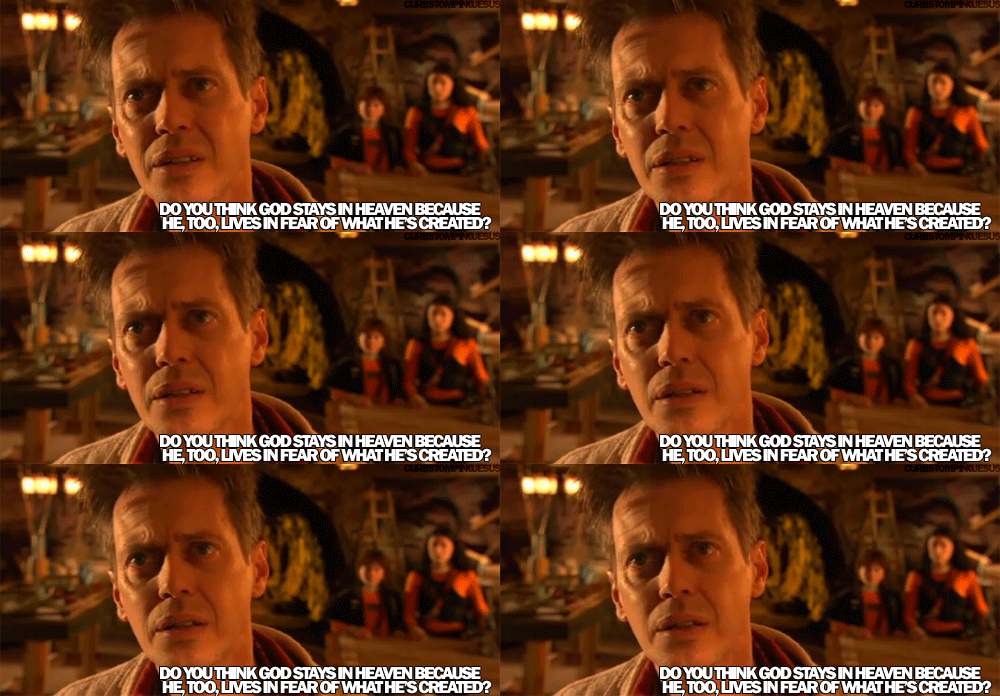
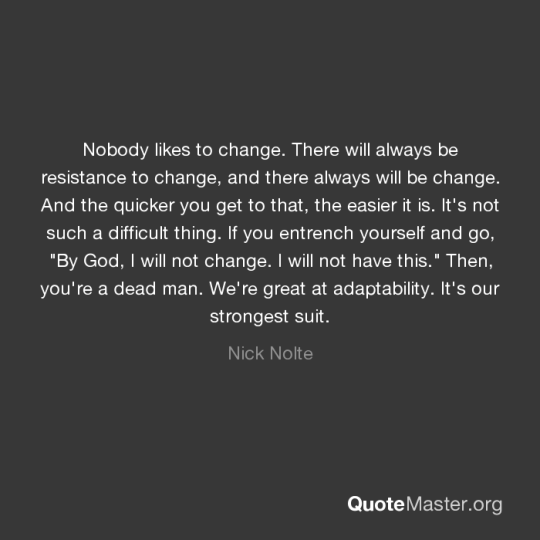
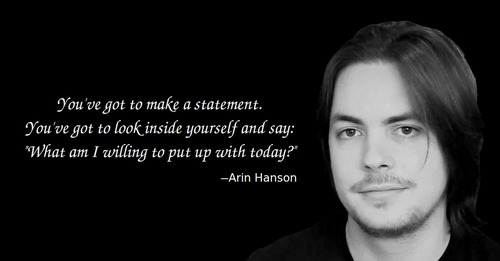
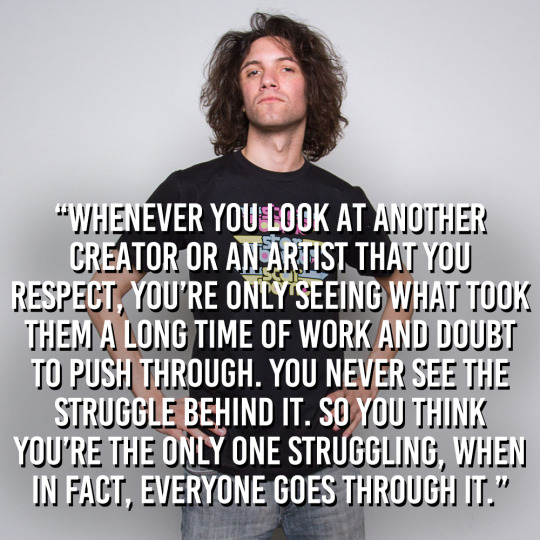
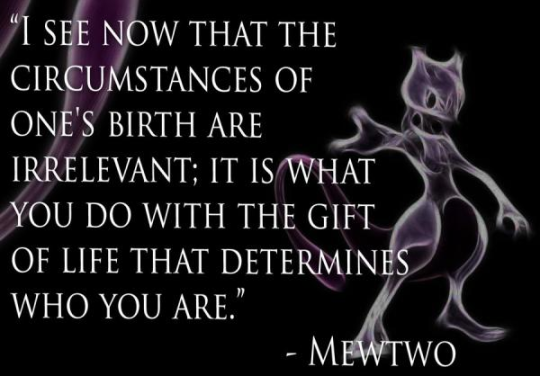
“i am a monument to all your sins” is such a fucking raw line for a villain it’s amazing that it came from halo, a modernish video game, and not some classical text or mythos

classic texts have nothing on the crazy people come up with in modern times tbh

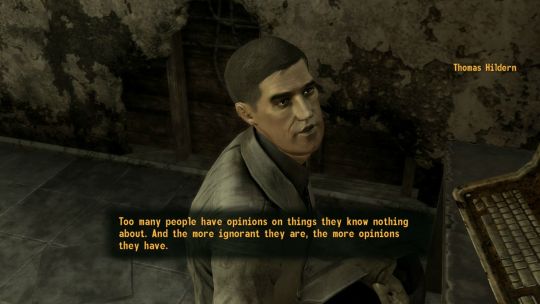
“I survived because the fire inside me burned brighter than the fire around me.”

– Joshua Graham, Who Is A Fallout New Vegas NPC, Something Most People Throwing This Quote Around Don’t Realize

“If the world chooses to become my enemy, I will fight like I always have.”

– Shadow the Hedgehog in what is widely considered one of if not the single worst game in the Sonic the Hedgehog franchise

this is the source for this text and it haunts me on a regular basis

image
image
image
image
image
image
image
image

“Pick a god and pray.”

-Fredrick from Fire Emblem Awakening

Huh, it’s almost like art isn’t just fine art…

this is my addition to this ever growing list of raw quotes originating from unexpected sources

So many good ones 🙂

veganconnor:

valsyrie:

I’m going to say something super controversial here: billionaires shouldn’t exist

i used to think billionaires were like. slightly richer millionaires but for reference: a million seconds is 12 days, a billion seconds is THIRTY TWO YEARS.

no one can convince me that it’s possible to possess a billion dollars, much less dozens of billions of dollars, and not be a disgusting terrible shitty unethical heartless human being

America is Regressing into a Developing Nation for Most People

karadin:

reagan-was-a-horrible-president:

This is a good article.

We have entered a phase of regression,and one of the easiest ways to see it is in our infrastructure: our roads and bridges look more like those in Thailand or Venezuela than the Netherlands or Japan. But it goes far deeper than that, which is why Temin uses a famous economic model created to understand developing nations to describe how far inequality has progressed in the United States. The model is the work of West Indian economist W. Arthur Lewis, the only person of African descent to win a Nobel Prize in economics. 

In the Lewis model of a dual economy, much of the low-wage sector has little influence over public policy. Check. 

The high-income sector will keep wages down in the other sector to provide cheap labor for its businesses. Check. 

Social control is used to keep the low-wage sector from challenging the policies favored by the high-income sector. Mass incarceration – check. 

The primary goal of the richest members of the high-income sector is to lower taxes. Check. 

Social and economic mobility is low. Check.

Temin says that today in the U.S., the ticket out is education, which is difficult for two reasons: you have to spend money over a long period of time, and the FTE sector is making those expenditures more and more costly by defunding public schools and making policies that increase student debt burdens.  

Even with a diploma, you will likely find that high-paying jobs come from networks of peers and relatives. Social capital, as well as economic capital, is critical, but because of America’s long history of racism and the obstacles it has created for accumulating both kinds of capital, black graduates often can only find jobs in education, social work, and government instead of higher-paying professional jobs like technology or finance— something most white people are not really aware of. Women are also held back by a long history of sexism and the burdens — made increasingly heavy — of making greater contributions to the unpaid care economy and lack of access to crucial healthcare.

How did we get this way?

What happened to America’s middle class, which rose triumphantly in the post-World War II years, buoyed by the GI bill, the victories of labor unions, and programs that gave the great mass of workers and their families health and pension benefits that provided security?

Around 1970, the productivity of workers began to get divided from their wages. Corporate attorney and later Supreme Court Justice Lewis Powell galvanized the business community to lobby vigorously for its interests. Johnson’s War on Poverty was replaced by Nixon’s War on Drugs, which sectioned off many members of the low-wage sector, disproportionately black, into prisons. Politicians increasingly influenced by the FTE sector turned from public-spirited universalism to free-market individualism. As money-driven politics accelerated (a phenomenon explained by the Investment Theory of Politics, as Temin explains), leaders of the FTE sector became increasingly emboldened to ignore the needs of members of the low-wage sector, or even to actively work against them.

 Temin notes that “the desire to preserve the inferior status of blacks has motivated policies against all members of the low-wage sector.”

What can we do?

We’ve been digging ourselves into a hole for over forty years, but Temin says that we know how to stop digging.

If we spent more on domestic rather than military activities, then the middle class would not vanish as quickly. 

The effects of technological change and globalization could be altered by political actions. 

We could restore and expand education, shifting resources from policies like mass incarceration to improving the human and social capital of all Americans. 

We could upgrade infrastructure, forgive mortgage and educational debt in the low-wage sector,

 reject the notion that private entities should replace democratic government in directing society, and

 focus on embracing an integrated American population. 

We could tax not only the income of the rich, but also their capital.


 We have a structure that predetermines winners and losers. We are not getting the benefits of all the people who could contribute to the growth of the economy, to advances in medicine or science which could improve the quality of life for everyone — including some of the rich people.”

Along with Thomas Piketty, whose Capital in the Twenty-First Century examines historical and modern inequality, Temin’s book has provided a giant red flag, illustrating a trajectory that will continue to accelerate as long as the 20 percent in the FTE sector are permitted to operate a country within America’s borders solely for themselves at the expense of the majority. 

Without a robust middle class, America is not only reverting to developing-country status, it is increasingly ripe for serious social turmoil that has not been seen in generations.

In Other Words Revolution

America is Regressing into a Developing Nation for Most People